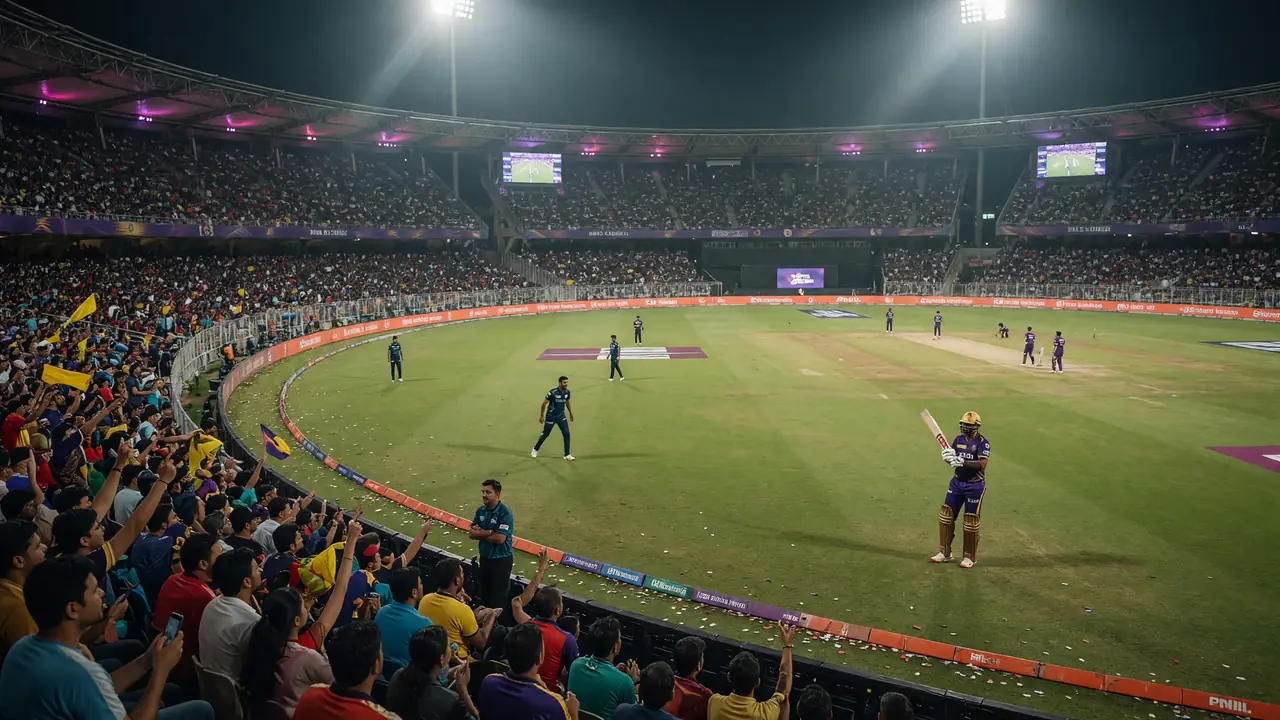
On 17 April 2026, The Sunday Guardian published a Dream11-facing preview for IPL 2026 Match 25 between Gujarat Titans and Kolkata Knight Riders at Narendra Modi Stadium, Ahmedabad. The listed start was 7:30 PM IST, or 2:00 PM GMT. The piece sat in the familiar pre-match lane: form snapshot, predicted elevens, pitch language, and a captain–vice-captain shortlist. This retrospective keeps that original date and that factual ceiling in view. It does not treat the preview as live news, and it does not invent scores, quotes or later match outcomes beyond what the archive record supplies.
For fantasy readers, the value of reopening an April preview is not nostalgia. It is pattern memory. Ahmedabad night games, red-soil bounce, and captain 2x decisions around home batters still sit at the centre of how Indian fantasy teams are built. The Sunday Guardian sheet is a clean case study of how one desk framed that decision tree before the toss.
GT arrived in the fixture after back-to-back wins over Delhi Capitals and Lucknow Super Giants. KKR, introduced in the same preview as three-time champions, were described as struggling. That contrast — a side carrying consecutive results against a side carrying pedigree but uneven form — is the first filter any fantasy selector would have used on the same evening.
What the archive actually locked in
The verified record is specific. Match 25 was framed as Gujarat Titans versus Kolkata Knight Riders at Narendra Modi Stadium. The Ahmedabad surface was called a batting-friendly red-soil pitch with true bounce and carry. Daytime heat near 41°C was flagged as a factor that could dry the surface and leave more for spinners later in the contest. Those four details — venue, fixture number, batting-friendly red soil, and late spin risk under extreme heat — form the non-negotiable base of this retrospective.
Everything below stays inside that base. Predicted elevens, captain justifications and differential notes are presented as the preview's own framing, not as confirmed final XIs or as post-match verdicts. Where the archive offers numbers — Gill's Ahmedabad returns, Buttler's recent scores, Prasidh Krishna's recent wicket tally — those numbers are retained as published claims from the source, not re-audited from a second feed.
The Ahmedabad pitch read, translated for fantasy
A batting-friendly red-soil surface with true bounce and carry is a top-order licence in fantasy terms. Openers and first-drop batters gain the cleanest path to cumulative points: boundaries early, strike-rate bonuses, and the chance to bat through a full Powerplay without the ball gripping. The same language also warns selectors not to empty the bowling budget into pure pace. Heat near 41°C that dries a surface often brings the ball back into the spinner's half later, which is why the preview's core eleven kept Rashid Khan, Sunil Narine and Varun Chakaravarthy in the conversation rather than treating them as luxury differentials.
For contest builders, that pitch sentence splits the card into two phases. Phase one rewards batters who face the new ball while bounce is true. Phase two rewards wrist-spin and mystery options once the surface has taken the day's heat. A balanced Ahmedabad XI in that frame usually carries two solid top-order stacks, one finishing batter, two all-rounders who can bowl middle overs, and at least one specialist spinner with a full four-over expectation.
The venue itself matters beyond soil colour. Narendra Modi Stadium is a large bowl where carry to the rope is honest but mis-hits do not always clear the deeper pockets. True bounce helps the batter who hits through the line; it also helps the quick who hits a hard length and forces the edge. That dual character is why the preview could endorse both Gill at the top and a pace trio built around Rabada, Siraj and Prasidh without contradicting itself.
Why the captain 2x sat with the home batter
The preview's captain call on Shubman Gill rested on a concrete Ahmedabad ledger: more than 1,300 runs at the ground, average 58, strike rate 165. Those figures are the kind of venue-specific evidence fantasy desks treat as hard weight, not colour. A captain 2x on a home opener who already owns that sample is a low-narrative, high-evidence move when the pitch note also says batting-friendly.
Predicted Gujarat Titans eleven and the roles inside it
The Sunday Guardian sheet listed GT as: Shubman Gill (captain), Sai Sudharsan, Jos Buttler (wicketkeeper), Washington Sundar, Glenn Phillips, Rahul Tewatia, Rashid Khan, Kagiso Rabada, Mohammed Siraj, Ashok Sharma and Prasidh Krishna. Impact-player options named were Shahrukh Khan, Manav Suthar and Jason Holder. Read as a fantasy structure rather than a team sheet, the eleven is top-heavy in batting points and deep in pace, with Rashid as the primary spin lever and Sundar as the second bowling all-rounder.
Gill and Sudharsan form the left–right opening spine. Buttler sits as the designated high-ceiling keeper-batter. Phillips and Tewatia supply middle-order hitting and, in Tewatia's case, part-time overs that can matter if the middle phase slows. Rashid is the locked spinner on almost any Ahmedabad card that expects a dry second half. Rabada, Siraj and Prasidh give three distinct pace lanes: new-ball control, hard length, and death-over spike. Ashok Sharma is the local seam option inside the published eleven; fantasy ownership on that name would have depended on confirmed minutes more than on reputation.
The impact shortlist is equally instructive. Shahrukh Khan is a pure batting injection if GT need a finisher. Manav Suthar is the spin-left-arm alternative if the surface dries faster than expected. Jason Holder is the overseas all-rounder insurance if an injury or match-up forces a seam-bowling change. None of those three should be treated as automatic starters from the archive alone; they are contingency labels attached to the predicted side.
Predicted Kolkata Knight Riders eleven and the counter-shape
KKR were listed as: Finn Allen, Ajinkya Rahane (captain), Cameron Green, Angkrish Raghuvanshi (wicketkeeper), Rovman Powell, Rinku Singh, Sunil Narine, Ramandeep Singh, Varun Chakaravarthy, Vaibhav Arora and Kartik Tyagi. Impact options were Manish Pandey, Anukul Roy and Umran Malik. Against GT's more classical top order, the KKR shape in the preview is explosive at the top, multi-dimensional through Green and Narine, and dependent on Rinku's finishing reputation plus Varun's middle-over choke.
Allen and Rahane open with opposite tempos: Allen for early boundary pressure, Rahane for stability and captaincy presence. Green is the high-salary all-round hinge. Raghuvanshi as keeper-batter is the youth ceiling pick inside the sheet. Powell and Rinku occupy the power-hitting band that decides many chase totals. Narine appears both as a bowling pillar and, in the differential notes, as a batter returning to the opening conversation. Ramandeep adds lower-order hitting and fielding upside. Arora and Tyagi are the new-ball and change-pace lanes beside Varun's wrist-spin.
The impact trio again reads as role insurance. Pandey is the middle-order batter if a collapse or match-up demands experience. Anukul Roy is the left-arm spin alternative. Umran Malik is pure pace upside if the ball is still skidding under lights. Fantasy teams that chased a KKR differential stack would have had to decide early whether Narine's multi-role minutes or Raghuvanshi's keeper-batter ceiling offered the cleaner ownership edge.
The suggested Dream11 core from the archive
The preview's suggested core was compact: Jos Buttler as vice-captain, Angkrish Raghuvanshi in the keeper conversation, batters Shubman Gill as captain, Ajinkya Rahane, Sai Sudharsan and Rinku Singh, all-rounders Rashid Khan and Sunil Narine, and bowlers Prasidh Krishna, Kagiso Rabada and Varun Chakaravarthy. That is an eleven-shaped spine rather than a full locked team, and it should be read that way. It privileges Ahmedabad top-order volume, two multi-format all-rounders, and a bowling mix that covers new ball, middle overs and death.
Gill as captain is the headline. The justification inside the archive is venue dominance: over 1,300 runs in Ahmedabad, average 58, strike rate 165. Those are not decorative numbers. In fantasy math, a captain with that home sample converts ordinary starts into outsized points because the 2x multiplies both the floor and the ceiling. Buttler as vice-captain rests on more recent form language in the same preview — scores of 52 and 60 — which is a shorter sample but a cleaner signal of current timing.
Raghuvanshi's inclusion is the youth and ownership play. Rahane and Sudharsan are the stabilisers who can still clear batting-point thresholds on a true surface. Rinku is the chase-finisher archetype. Rashid and Narine are the dual-engine all-rounders: one for GT's middle overs, one for KKR's multi-phase involvement. Prasidh, Rabada and Varun close the bowling triangle with different dismissal modes.
Bowling lanes the preview refused to ignore
Prasidh Krishna's cited form — 35 wickets in his last 19 IPL innings — is the clearest bowling differential in the archive. Rabada supplies the overseas new-ball floor. Varun covers the dry-surface middle overs the pitch note anticipates. Together they explain why the suggested core did not collapse into an all-batter Ahmedabad punt.
Captain, vice-captain and the ownership logic
Captaincy on Gill was not a brand pick in the preview; it was a venue pick. Average 58 and strike rate 165 at Ahmedabad is the kind of split that survives small form dips because the ground itself is doing part of the work. Vice-captaincy on Buttler pairs a foreign keeper-batter's ceiling with two concrete recent scores. That C/VC pair also hedges formats inside one team: Gill for volume and familiarity, Buttler for upside if the Powerplay is seized.
Secondary captain routes visible in the same sheet, even if not labelled as the primary call, would have included Rashid on a spinning second half and Narine if he truly opened and bowled his full quota. Those routes carry higher variance. They make sense in grand-league builds where unique captaincy is the edge, not in small-league builds where correlated top-order ownership is safer. The archive itself, however, is unambiguous about the primary recommendation: Gill captain, Buttler vice-captain.
Ownership logic follows from that. Safe builds would have stacked Gill, Buttler, Sudharsan and one of Rashid or Rabada. Differential builds would have added Raghuvanshi, leaned into Narine's dual role, or elevated Prasidh on the 35-in-19 bowling spike. The pitch's late-spin warning is the bridge between those two approaches: even a batting-first card still needs a spinner who can bowl four overs when the ball stops skidding.
Differential notes the desk still uses from this sheet
Two X-factor lines from the preview remain useful as teaching notes. First, Sunil Narine returning to the opening slot changes his fantasy identity from pure bowler to multi-category contributor. Opening minutes raise the batting floor; full bowling overs protect the bowling floor. That combination is rare and, when confirmed in the toss window, justifies the salary. Second, Prasidh Krishna's 35 wickets in his last 19 IPL innings is a pure form differential. On a surface with true bounce, a quick who is already taking wickets at that clip is not a speculative flyer; he is a form-backed seam option against a top order that must score quickly under lights.
Raghuvanshi sits in a third differential band: young keeper-batter with a published place in the predicted eleven. Keeper slots in fantasy are often filled by the safest overseas name; a domestic keeper inside the predicted XI is the classic low-ownership alternative when the primary overseas keeper is already locked as vice-captain on the other side.
What the archive does not do is invent injury drama or last-hour replacements. The impact lists are there, but they are labelled as options. A disciplined retrospective keeps that boundary. Fantasy process improves when selectors separate predicted elevens from confirmed elevens and refuse to spend salary on rumours the source never printed.
How the form contrast shaped team construction
GT's back-to-back wins over Delhi Capitals and Lucknow Super Giants gave the preview a simple narrative handle: momentum with the home side. KKR's description as struggling, despite three titles in the franchise history, pushed fantasy weight toward GT batting and away from blind loyalty to purple jerseys. That does not mean KKR names were unusable. It means the burden of proof sat with KKR differentials. Rinku, Narine and Varun still cleared that burden inside the suggested core because their roles were concrete. Lesser-owned KKR names would have needed either confirmed minutes or a clear match-up the preview does not supply.
In practical team builds, that contrast often produces a 6–5 or 7–4 GT lean on small leagues, with grand-league cards more willing to flip the stack if Narine opens and Arora or Tyagi share the new ball. The archive supports the lean; it does not mandate a shutout of KKR assets.
A working checklist drawn only from the verified sheet
First, lock the venue facts before the names: Ahmedabad, red-soil, true bounce, heat near 41°C, spin later. Second, treat Gill's Ahmedabad ledger as the captaincy baseline unless a confirmed XI removes him from the top order. Third, keep Buttler's recent 52 and 60 in the vice-captain or premium batter band. Fourth, protect bowling balance with at least one of Rashid or Varun and one of Prasidh or Rabada. Fifth, only spend differential salary on Narine's opening role or Prasidh's wicket spike when the minutes look real. Sixth, read impact names as contingency, not as free upgrades.
That checklist is deliberately narrow. It is the point of a retrospective built from one archive: fewer claims, tighter process, no borrowed drama from outside the source.
Where this April sheet still earns a place on the desk
The lasting use of the 17 April 2026 preview is methodological. It shows a clean order of operations for an Ahmedabad night game: establish the pitch and heat story, anchor captaincy in venue evidence, pair the captain with a form-backed vice-captain, then spend the remaining salary on role certainty rather than franchise sentiment. Gill's 1,300-plus Ahmedabad runs, Buttler's 52 and 60, Prasidh's 35 wickets in 19 innings, and Narine's possible return to the opening slot are the four concrete levers the sheet leaves behind.
Compared with noisier preview culture, the archive is restrained. It names predicted elevens, states a pitch opinion, and justifies captaincy with numbers instead of adjectives. For readers who build teams across an IPL season, that restraint is the lesson worth keeping. The fixture itself is fixed in the past tense. The process — venue first, evidence-backed captain second, role-true differentials third — remains the part that still travels.
For daily captain notes, differential habits and the wider seasonal reading list, the desk's ongoing columns live on the Fantasy Tips Blog. The Match 25 sheet above is one archived decision tree inside that longer practice: a single Ahmedabad night, filed on 17 April 2026, still useful because the evidence trail is short, specific and honest about what it does not know.
Filed by the IFI Editorial Desk as a reference retrospective. Original fantasy preview published by The Sunday Guardian on 17 April 2026 for IPL 2026 Match 25 between Gujarat Titans and Kolkata Knight Riders at Narendra Modi Stadium, Ahmedabad. This editorial stays inside the verified archive facts and does not add later scores, unconfirmed elevens or outside reporting. Photographs are illustrative editorial frames of a night-match environment, not match-action stills from the fixture.