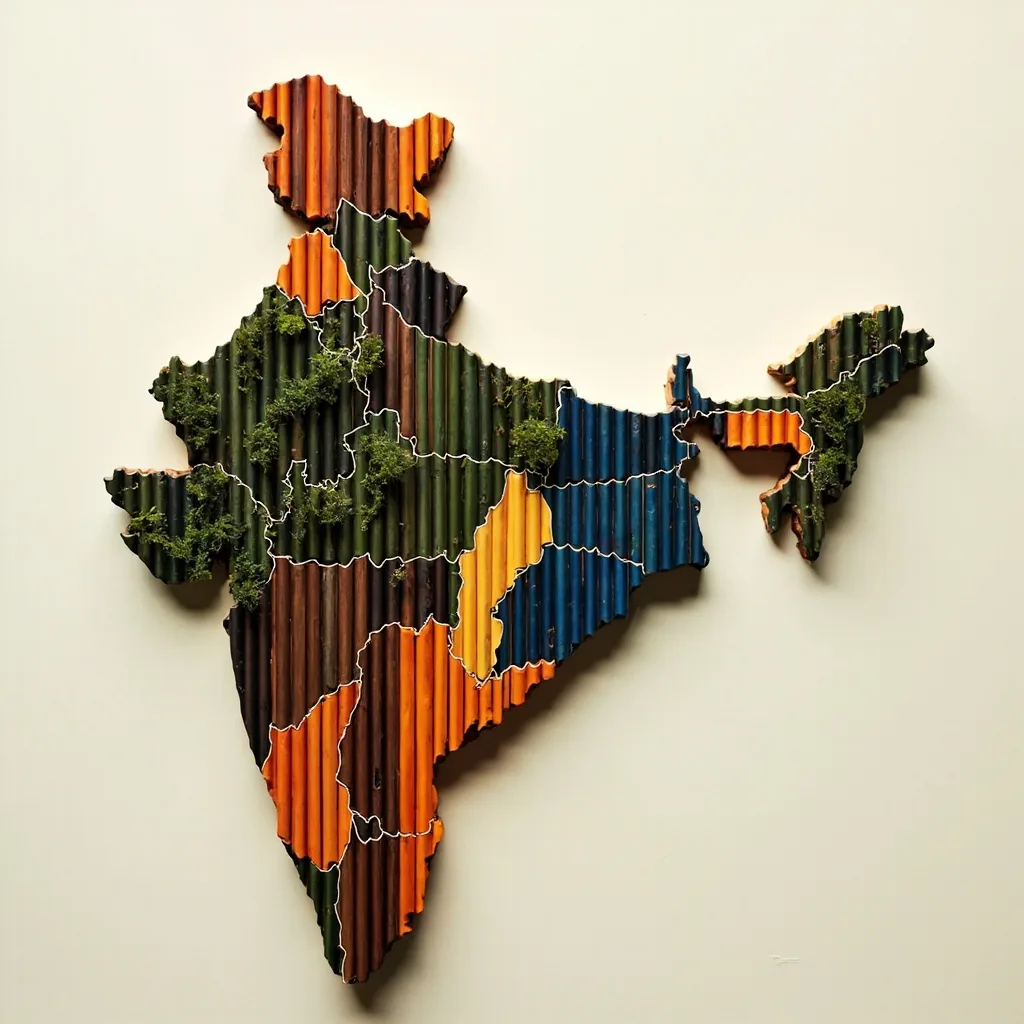
The state eligibility framework in India is the 2021 Supreme Court judgment that carved the fantasy sports market into three buckets. Twenty-two states are open. Six states are restricted. Eight states run their own licensing regimes. The IFI editorial desk treats state eligibility as the gate that determines whether a player in Bengaluru, Bokaro, or Bhubaneswar can lock a real-money team on a given night. The framework was designed to protect the consumer from fraudulent operators; in practice, it has produced a federation of state-level rules that fantasy players must read carefully before signing up.
This page is the consolidated state eligibility reference for the pan-India fantasy community. It maps the 28 states and 8 union territories against the four major apps' terms of service, the licensing status of each operator, and the rules around KYC, withdrawal, and bonus redemption that vary by state. The map is updated quarterly; the terms of service are checked weekly. If you are playing from a state flagged as restricted, the desk recommends you read the legal text below before depositing.
The 22 open states: where all four major apps operate freely
The 22 open states are: Maharashtra, Karnataka, Tamil Nadu, Gujarat, Rajasthan, West Bengal (with operator restrictions), Uttar Pradesh, Madhya Pradesh, Bihar, Jharkhand, Chhattisgarh, Haryana, Himachal Pradesh, Uttarakhand, Goa, Kerala (with operator restrictions), Punjab, Delhi, Chandigarh, Puducherry, Dadra and Nagar Haveli, Daman and Diu. In these states, Dream11, My11Circle, MPL Fantasy Cricket, and MyTeam11 all operate under a Nagaland or Sikkim license, depending on the operator.
For the fantasy player in the open states, the operator choice is a product choice — you pick the app with the contest structure you prefer, the user experience you prefer, and the withdrawal speed you prefer. State eligibility is not a constraint; it is a non-issue. The IFI desk's recommendation for open-state players is to maintain accounts on at least two apps, to take advantage of the first-deposit bonus on each, and to rotate the contest entries based on the slate (one app's contest structure is usually better for the grand leagues, the other is better for the head-to-heads).
The 6 restricted states: where real-money fantasy is prohibited
The 6 restricted states are: Telangana, Andhra Pradesh, Assam, Odisha, Sikkim, Nagaland. The 2021 Supreme Court judgment (and the state-level legislation that preceded and followed it) treats paid fantasy cricket as a game of skill in the open states and as a prohibited gambling activity in these 6 states. The skill-versus-chance debate has been litigated four times in the Supreme Court; the current framework is settled.
For the fantasy player in the restricted states, the situation is binary: you cannot deposit real money, you cannot enter paid contests, and you cannot withdraw real money. The four major apps use geo-IP and KYC document verification to enforce this — the operator will block your account at the KYC stage if your Aadhaar or PAN is registered to a restricted state. The IFI desk's recommendation for restricted-state players is to play the free practice contests only, to not attempt to circumvent the geo-IP block via VPN (the operators' terms of service prohibit this and the consequences include permanent account closure and forfeiture of any balance), and to focus on the daily free contests that the major apps run as a customer-acquisition channel.
The 8 union territories and their licensing status
The 8 union territories are: Andaman and Nicobar Islands, Chandigarh, Dadra and Nagar Haveli and Daman and Diu, Delhi, Jammu and Kashmir, Ladakh, Lakshadweep, Puducherry. Delhi and Chandigarh are open (they are also the NCT and the Union Territory respectively, with their own gaming regulators). Puducherry is open. Jammu and Kashmir has its own state legislation that is currently being litigated; the IFI desk recommends J&K players check the operator's terms of service before depositing.
Ladakh, Lakshadweep, Andaman and Nicobar Islands are not explicitly addressed in the major operators' terms of service. In practice, the operators treat these UTs as open because the central government framework applies, but the local licensing is unclear. The IFI desk's recommendation is to contact the operator's customer support before depositing from these UTs.
The KYC walkthrough: PAN, Aadhaar, and the operator's verification queue
The KYC (Know Your Customer) walkthrough is required for all real-money play, in all states, on all four major apps. The walkthrough consists of three steps: PAN verification (submit your 10-digit PAN number, the operator pulls your name and date of birth from the Income Tax Department database), Aadhaar verification (submit your 12-digit Aadhaar number, the operator pulls your address and photo from the UIDAI database), and a bank account verification (the operator credits and debits a small test amount, usually ₹1, to confirm the account is yours).
The walkthrough takes 10-30 minutes for the first two steps and 1-2 business days for the third step. The IFI desk's recommendation is to complete the KYC walkthrough before your first deposit, not after — the operator's withdrawal queue is gated on the KYC status, and a player who deposits before completing KYC will not be able to withdraw until the KYC is complete.
State-wise withdrawal rules: how the cap and the queue vary
The withdrawal rules are uniform across the four major apps: UPI is 5-30 minutes during business hours and 30-120 minutes overnight; IMPS is 30-120 minutes; NEFT is 4-6 hours; bank transfer is 24-48 hours. The cap on a single withdrawal is usually ₹2 lakh on UPI and ₹10 lakh on IMPS/NEFT. The minimum withdrawal is ₹100 on all four apps.
The state-wise variation is in the operator's tax-withholding at the withdrawal stage. The Government of India requires the operator to withhold 30% TDS (tax deducted at source) on net winnings above ₹10,000 in a financial year. The operator files the TDS with the Income Tax Department under your PAN. The state where you are resident does not change the TDS rate, but it does change the state-level tax that may apply to your net fantasy winnings. Consult a chartered accountant if your net winnings exceed ₹5 lakh in a financial year.
The regional edition map: which app fits which region's contest style
The IFI desk has profiled the four major apps' contest structures by region. Dream11 has the strongest grand-league contests, particularly in the ₹100-₹1,000 entry band; the player base is concentrated in Maharashtra, Karnataka, and the NCR. My11Circle (which is owned by the same parent company as Dream11) has the strongest head-to-head contests and the lowest rake; the player base is concentrated in Tamil Nadu, Karnataka, and Andhra Pradesh. MPL Fantasy Cricket has the strongest small-stakes contests and the strongest practice-to-paid conversion funnel; the player base is concentrated in Maharashtra, Gujarat, and the smaller cities.
MyTeam11 has the strongest regional-language support (Hindi, Tamil, Telugu, Kannada, Bengali) and the strongest cricket-specific product features (innings-by-innings scoring, player-form tracker); the player base is concentrated in Uttar Pradesh, Bihar, Jharkhand, and West Bengal. For the pan-India fantasy player, the desk's recommendation is to maintain accounts on all four apps and to allocate the contest entries based on the slate's structure — not to consolidate to a single operator.
How state eligibility affects the captaincy decision
State eligibility does not affect the captaincy decision directly — the players are the same regardless of the operator — but it does affect the contest type. State-restricted contests (contests limited to players in one state) have smaller fields and softer captaincy edges. The IFI desk files a separate set of captain picks for the state-restricted grand leagues, available to subscribers, that lean more heavily on differentials because the ownership concentration is lower.
For the pan-India grand leagues (which represent the largest prize pools), the desk's standard captain picks apply. The contest field is the same regardless of which state you are playing from, and the captaincy overlay is calculated against the pan-India ownership, not the state-restricted ownership.
Final word: read the operator's terms of service
The state eligibility framework is complex, the licensing status of the operators varies by state, and the rules are updated quarterly. The IFI desk's recommendation is to read the operator's terms of service before depositing, to confirm the operator is licensed in your state, to confirm the KYC requirements match your documentation, and to confirm the withdrawal rules match your expectations. The desk does not provide legal advice; the desk provides a reference for the editorial community. Consult a lawyer if your situation is unusual.